The Unspoken Truths of a Digital Diagnosis: Insights from the r/breastcancer Community
Sep 10, 2025

Key insights
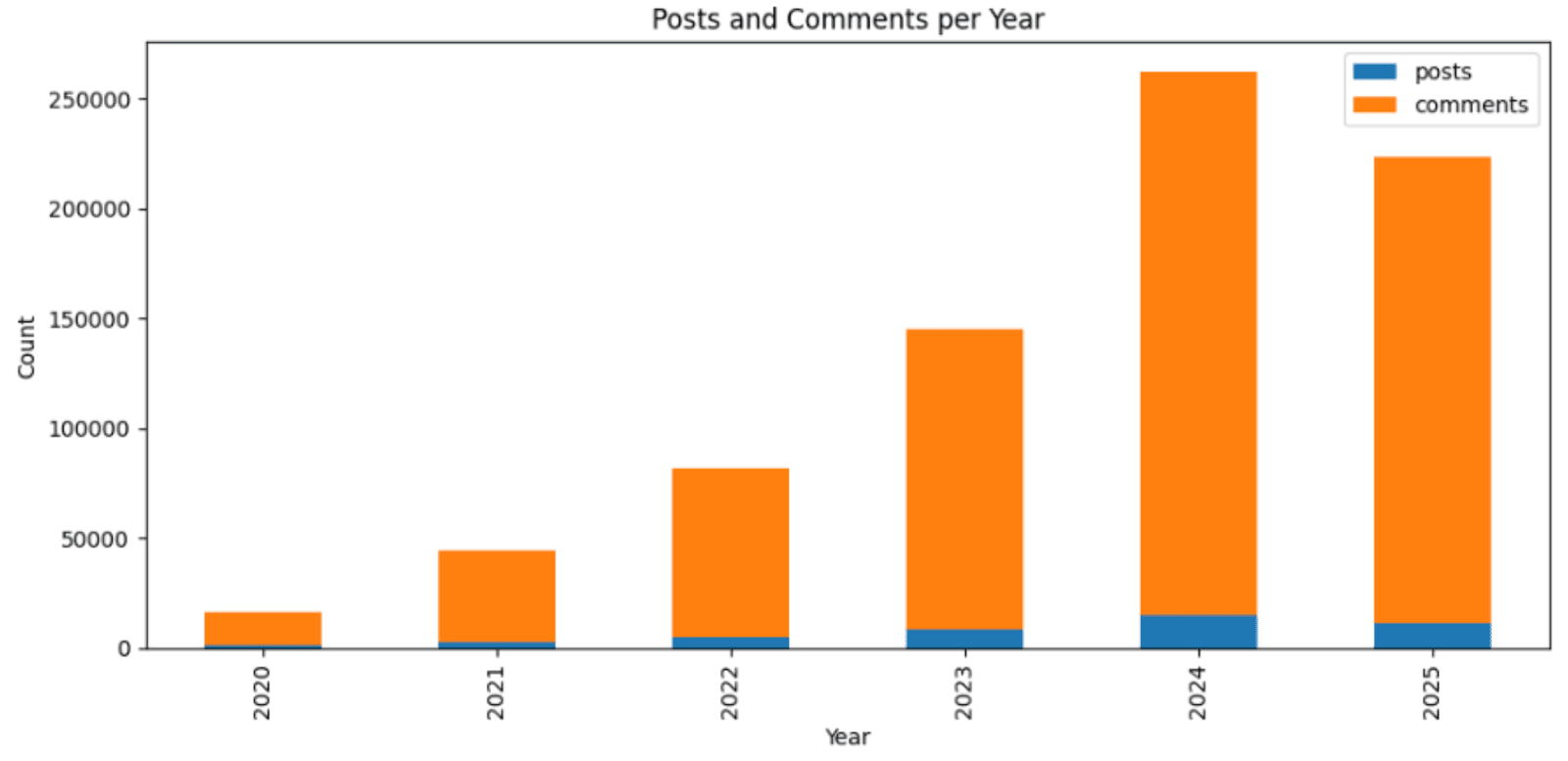
A growing community: The subreddit has more than quadrupled since 2020, with comments surging to over 250,000 in 2024.
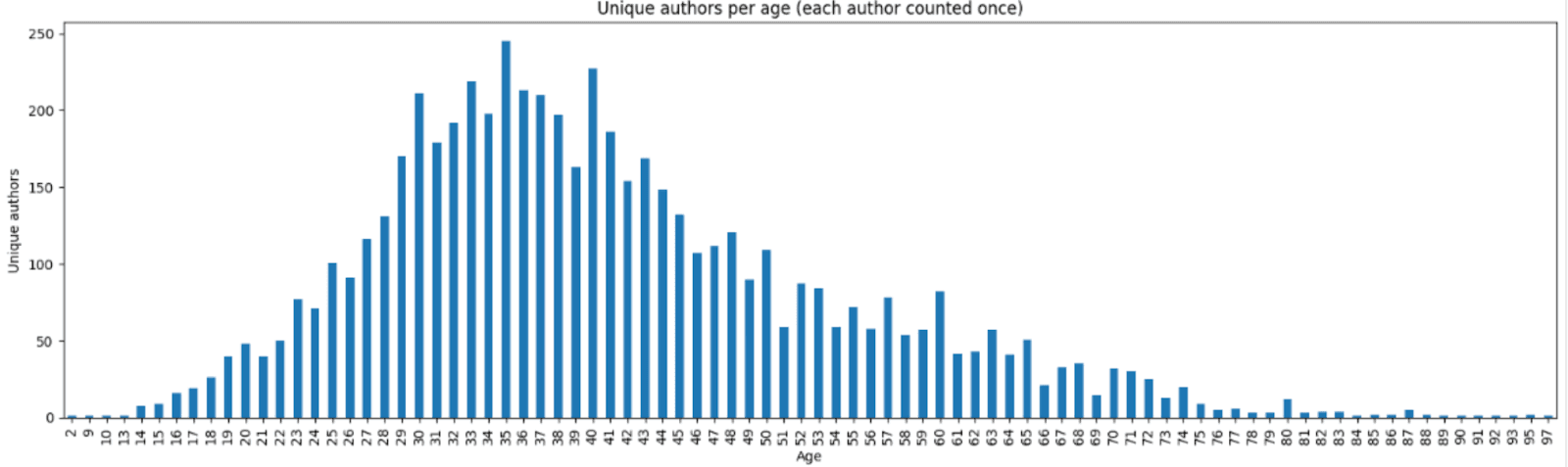
Younger patients: The largest group of participants are between 30 and 39 (34.9%), challenging stereotypes.
A safe space: The user [deleted] is a top contributor, showing people use the platform as a temporary, anonymous sanctuary.
More than medical advice: The subreddit addresses non medical problems like dealing with an unsupportive partner or insensitive coworker.
Emotional context: The community validates emotions like anxiety and depression, offering support often not found in the clinic.
Social guidance: Users get advice on the social implications of treatment, like navigating difficult conversations and managing hair loss.
Introduction
Breast cancer is a complex, formidable opponent. Its story isn't just told in clinical reports or doctor's appointments; it’s lived in the quiet moments of a late-night Google search, in the anxious wait for biopsy results, and in the overwhelming fatigue after a chemotherapy session. For many, these personal battles find a collective home in the digital world specifically, on subreddits like r/breastcancer.
At Nayara.ai, we believe that understanding human experiences starts with listening to the voices that share them. By analyzing a massive dataset of posts and comments from the r/breastcancer subreddit, we've gained a unique window into the unfiltered, real-time realities of those navigating this journey. Our analysis, enhanced by key data visualizations, reveals not just what people talk about, but what they truly need: not just medical facts, but human connection.
A Growing Community of Shared Experience
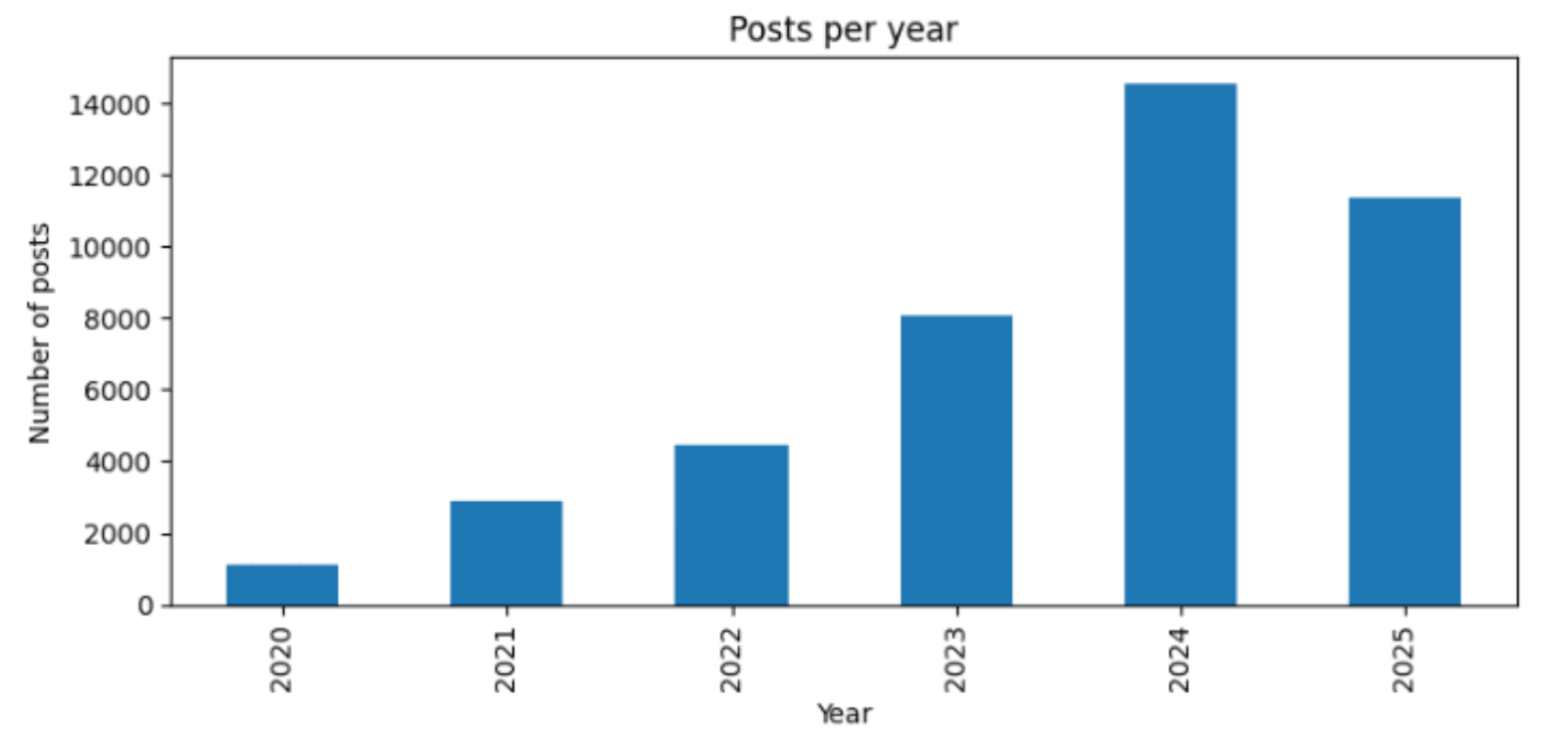
The r/breastcancer subreddit is a rapidly expanding space. Our analysis of posts and comments per year shows a community that has more than quadrupled in size since 2020. The number of posts peaked in 2024 at over 14,000, while comments surged to over 250,000 in the same year. This dramatic growth isn't just a matter of scale; it's a testament to the community's increasing importance. As the volume of comments outpaced posts, the subreddit evolved from a simple forum for questions to a dynamic, conversational support group where every question is met with a wave of empathy and shared knowledge.
This growth is driven by a surprisingly young and diverse population. Challenging the stereotype of breast cancer as a disease of the elderly, our data on user age reveals that the largest group of participants are between 30 and 39 (34.9%), followed by 40-49 (22.4%) and 21-29 (17.5%). This confirms that breast cancer is a significant concern for younger people, who are turning to digital communities to find peers who understand their unique challenges, from fertility concerns to navigating career impacts. The community is not a place for passive information consumption; it’s a living, breathing network of people seeking and offering genuine connection.
The Voices Behind the Numbers: A Powerful [Deleted] User
When we examine the activity of the top contributors, a powerful pattern emerges. The user [deleted], which isn't a single person but a designation for removed accounts, is the second most active participant with over 7,400 total activities. This non-trivial finding speaks to the deeply vulnerable nature of the community: many people feel a powerful need to share their story, but once they've done so, they may feel exposed and choose to remove their digital footprint. It shows the community serves as a temporary, anonymous sanctuary, a space to unburden oneself with the comfort of knowing that others have heard their truth.
The data reveals distinct user behaviors within this supportive network. While a small group of highly active individuals drives a significant amount of the total activity, the community's strength comes from its diverse participation. Among the top 10 most active contributors by total activity, many are primarily commenters, such as automoderator (11,107 comments) and kai12223 (3,349 comments). In contrast, the top 10 authors by posts show a more balanced approach, with some users like litarider (202 posts) being highly prolific posters, but others like ankusnoo and averyelle87 contributing frequently to both posts and comments. This blend of roles from dedicated question-askers to consistent providers of support creates a rich, interdependent ecosystem where everyone has a place.
The Clinical and The Human: Medications, Procedures, and Their Impacts
Medical terms take on a different weight in this community. They are not just words on a chart; they are the anchors of a life-altering journey.
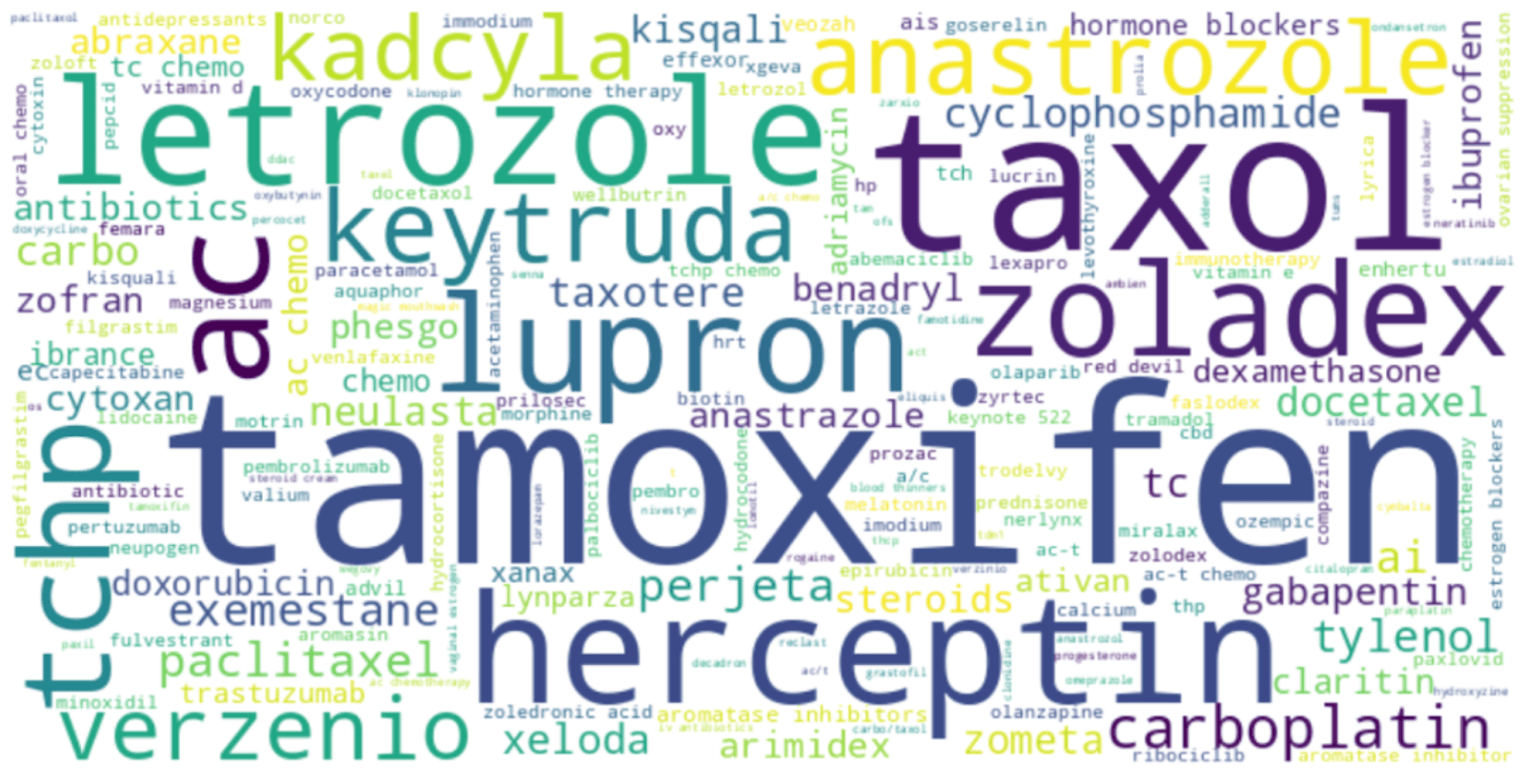
Our analysis of over 42,000 posts reveals that while 67.55% of conversations don't mention specific medications, those that do show a clear focus on the most impactful treatments. The word cloud of medications is a visual representation of this, with terms like tamoxifen, taxol, and herceptin looming large. These drugs are the subject of thousands of posts, not just for their clinical purpose but for the side effects and personal dilemmas they introduce.
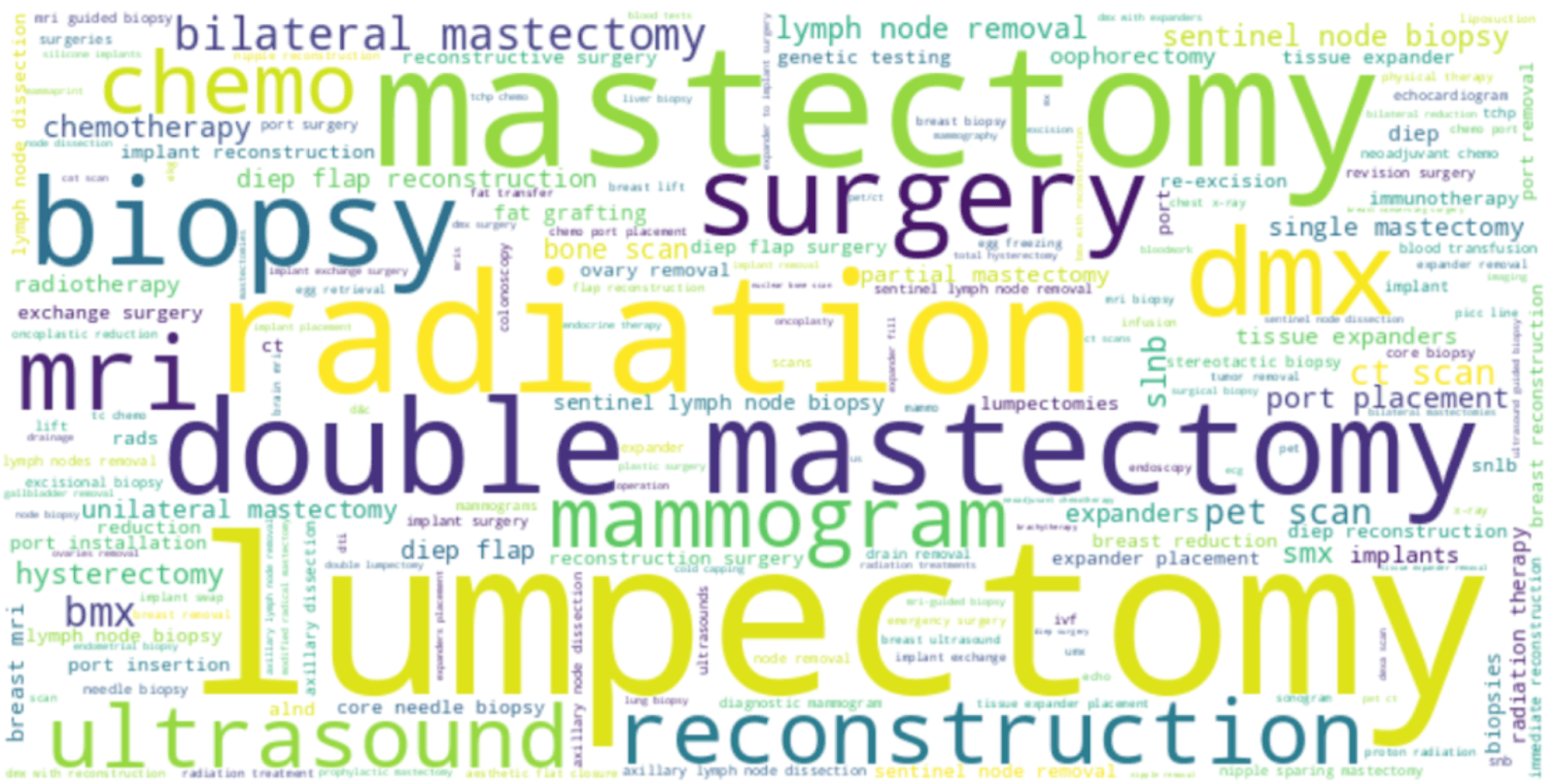
Similarly, the word cloud for procedures highlights the centrality of surgical intervention. Words like lumpectomy, mastectomy, and radiation dominate, each representing a monumental step in the patient journey. The prevalence of terms like biopsy and reconstruction shows that the community is a place where people discuss the entire process, from the first steps of diagnosis to the final stages of recovery and rebuilding.
Beyond the Clinical: The Real Impact of Treatment
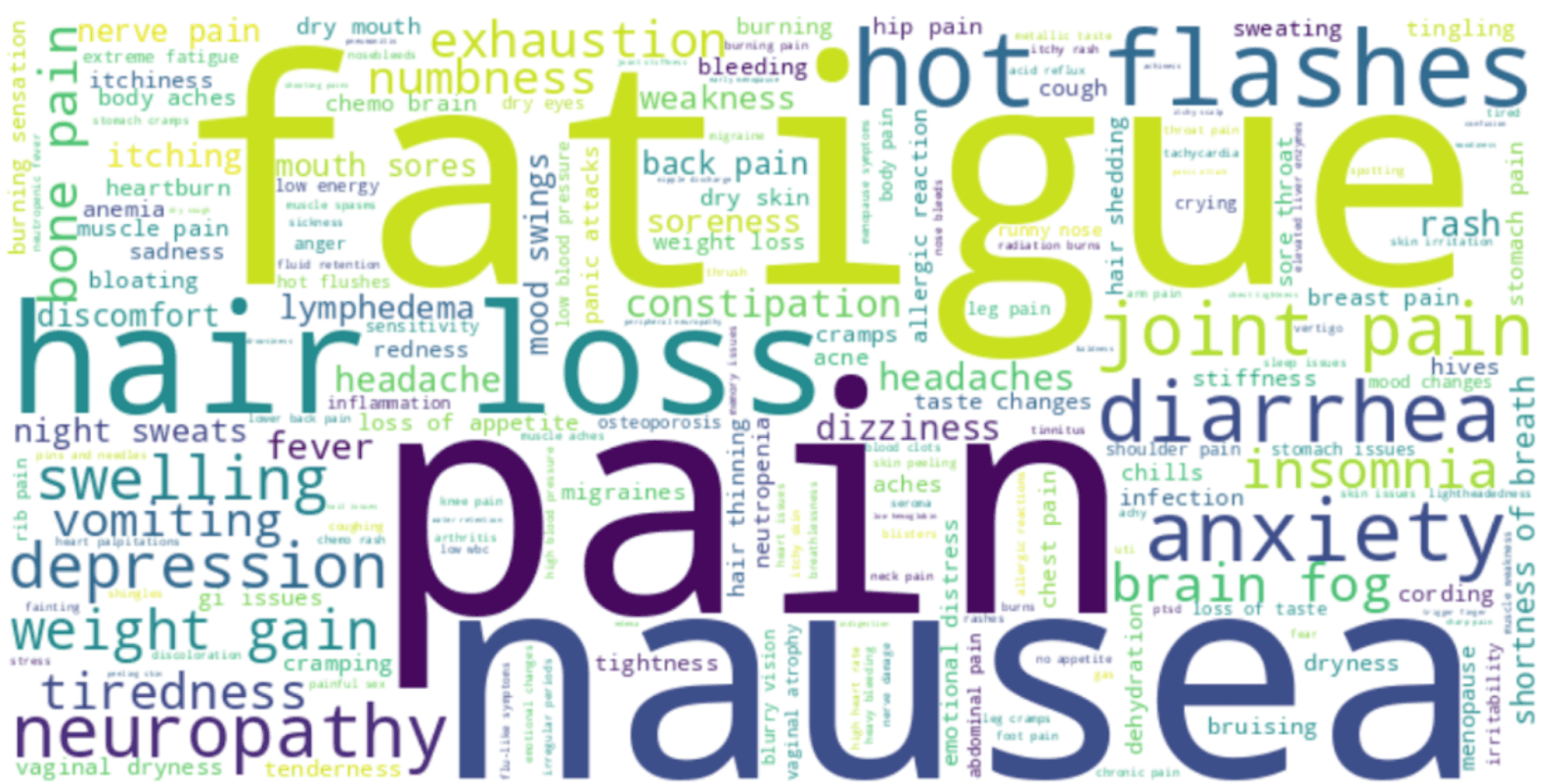
While a doctor’s chart may list side effects, the subreddit provides the raw, human experience behind them. Our analysis of the side effects data revealed over 4,300 unique terms used to describe the impact of treatment. The top 50 terms paint a vivid picture of the physical and emotional toll.
The most common side effects mentioned are:
Pain: Mentioned 1,059 times
Fatigue: Mentioned 1,030 times
Nausea: Mentioned 913 times
Hair loss: Mentioned 724 times
Hot flashes: Mentioned 630 times
Beyond these expected physical symptoms, the data reveals a deeper layer of challenges. A user's experience isn't just about nausea; it's about the pervasive brain fog (236 mentions), the debilitating anxiety (425 mentions), and the profound depression (341 mentions). These are the side effects that official brochures often downplay, but they are central to the conversations on r/breastcancer. The data validates the emotional experience, showing that these feelings are not isolated but widely shared.
More Than Just Advice: The Human Problems and Solutions
The true heart of the subreddit lies in its ability to address the non-medical, yet deeply significant, problems that arise from a cancer diagnosis. These aren't issues you'd find in a textbook; they are the personal conflicts and emotional struggles that truly define the cancer experience. And the community's solutions are as direct and empathetic as the problems are complex.
The Unsupportive Partner: One user shared the story of her husband, who was "stressed" and opposed her recommended chemo treatment. While this is a medical decision, the problem is entirely relational. The community’s top-voted solution cut to the chase: "I don't have any advice re: chemo, other than to say I’ve been through five months of TCHP and I don't know your husband, but if he is too stressed, he should drop school or get a deferment. Your life is on the line." This simple act of validating the patient's fear and telling her to prioritize her life over her husband's temporary stress is a powerful, non-trivial solution.
The Insensitive Coworker: Another post from a user who was devastated by a coworker's rude comment about her wig received a torrent of support. The most upvoted response wasn't a platitude but a clear call to action: "Fuck her. Report her for harassment. Who tf walks up to a cancer patient and criticizes their hair?" This kind of response provides the user with both validation for her anger and permission to stand up for herself something she might not feel comfortable doing in her professional life.
The Weight of Being "Strong": A user struggling with friends and family constantly calling her "strong" received a flood of comments from people who shared her frustration. The advice wasn't to "be strong," but to set boundaries and give herself permission to feel weak, sad, or angry. One highly upvoted comment from a caregiver explained, "You're not a monster. Life is short and you gotta put your oxygen mask on first." This simple metaphor gives permission to prioritize self-care, which is a powerful message in a world that expects cancer patients to be perpetually positive.
Conclusion: A Tapestry of Shared Experience
The r/breastcancer subreddit is a masterclass in community and human resilience. Our data analysis shows that it is a space where people come to navigate the most challenging moments of their lives. It is a place where medical jargon gives way to a vocabulary of raw, honest experience where a mastectomy isn't just a procedure, but a life-changing event; where side effects aren't just symptoms, but a daily battle.
The community is more than a passive source of information. It's a place where women and their loved ones, predominantly in their 30s and 40s, come for both clinical guidance and deeply human support. They seek not just a list of treatments but the real stories behind them, from how to deal with hair loss to how to talk to an unsupportive partner. The insights gleaned from this data are a testament to the power of shared experience and a guide for how healthcare can move beyond the purely clinical to address the emotional and social realities of a cancer diagnosis.
By understanding the data, we can better appreciate the human side of illness and build more compassionate and effective tools to support those who need it most. The story of breast cancer is not just written in medical charts; it's being written every day, in every post and every comment, by the brave individuals who are fighting and living with it.
Subscribe to our newsletter
Clinical-Grade AI Agents Built Around Your Care Pathways
GY HEALTH TECHNOLOGY LIMITED
Gravita Aldgate Tower
2 Leman Street
London
E1 8FA
United Kingdom
Company number: 15899737
Interested in becoming a partner?
Get in touch
info@nayara.ai
Disclaimer: This website does not provide medical advice
The information, including but not limited to, text, graphics, images and other material contained on this website are for informational purposes only. No material on this site is intended to be a substitute for professional medical advice, diagnosis or treatment.
© Nayara 2026
Site by Ephny Studio